
Last updated: 17 Nov 2026, 7:00 PM IST
A viral video claims to show a pterodactyl flying over a neighbourhood in Ciudad Juárez, Mexico. Snopes rated the clip fake, saying it was generated or edited with AI.
Main source: Snopes fact check by Laerke Christensen, 17 November 2026. We checked the viral pterodactyl video in Mexico against Snopes' frame-by-frame findings, statements from Ciudad Juárez's Civil Protection office reported by local media, and what London's Natural History Museum says about pterosaurs.
VERDICT: FALSE. The viral video does not show a real pterodactyl over Ciudad Juárez. Snopes rated the clip fake, saying it was generated or edited with artificial intelligence: letters on a building morph and change in the first second. On 11 November, before this clip circulated, Ciudad Juárez Civil Protection chief Sergio Rodríguez told local media that the pterodactyl videos then being shared were "digital entertainment" with no real basis. Pterosaurs have been extinct for about 66 million years, according to London's Natural History Museum.
The Claim
In mid-November 2026, a short clip spread on Instagram, Facebook and Threads, according to Snopes, claiming to show a pterodactyl flying through the night sky over Ciudad Juárez, in Mexico's Chihuahua state, right on the US border with El Paso, Texas. One meme account that shared it wrote, as quoted by Snopes:
"Some Mexican citizens claim to have captured a pterodactyl flying through the night sky over Ciudad Juárez, Chihuahua, Mexico. Videos circulating online show a large, dark, winged silhouette that has sparked speculation about the possible sighting of a prehistoric creature."
Snopes says it found versions of the clip claiming it was recorded on 14 November and others claiming 15 November, and readers asked it whether the video was real.
What Snopes Found
1. The building text changes. At the start of the clip, letters on a building that later read "Jalpan de" are illegible shapes, then snap into readable text within a second. Snopes says garbled text is a telltale sign of AI-generated or AI-edited video and that this is inconsistent with how printed text behaves in authentic footage.
2. Nobody knows who made it. Snopes says the source of the fake clip was unclear.
3. It followed earlier claims. Starting on 5 November, Mexican journalist Jaime Maussan, who reports on UFOs and the paranormal, shared three clips on his YouTube channel that he claimed showed a pterodactyl near Ciudad Juárez, according to Snopes. Infobae reported that one of those was a clip about one and a half seconds long from the Anapra area. Snopes says it's unclear whether Maussan's videos inspired the AI fake, and notes its "fake" rating applies to the viral clip it analysed specifically.
4. Maussan's earlier claims. Snopes has previously reported on Maussan presenting a supposed alien mummy from Nazca, Peru, in 2015 that turned out to be a human child's body, and on his 2023 appearance before Mexico's Congress showing what he claimed were thousand-year-old alien corpses.
What Local Officials Said
On 11 November 2026, Sergio Rodríguez, head of Ciudad Juárez's municipal Civil Protection department, told local outlets Netnoticias and Radionet that the pterodactyl videos circulating at the time were digital entertainment with no real basis, and asked people to handle the information responsibly. These comments predate the clip Snopes analysed, which was dated 14 or 15 November; Snopes reports that Rodríguez was referring to Maussan's videos. He added (our translation from Spanish) that if such an animal really existed in the region, "we would have the INAH and international and world institutions here investigating the case, and that's not the case." The INAH is Mexico's National Institute of Anthropology and History.
Snopes says it contacted Rodríguez and the INAH to confirm and was awaiting replies when it published.
The Science Check: Pterosaurs Have Been Extinct for 66 Million Years
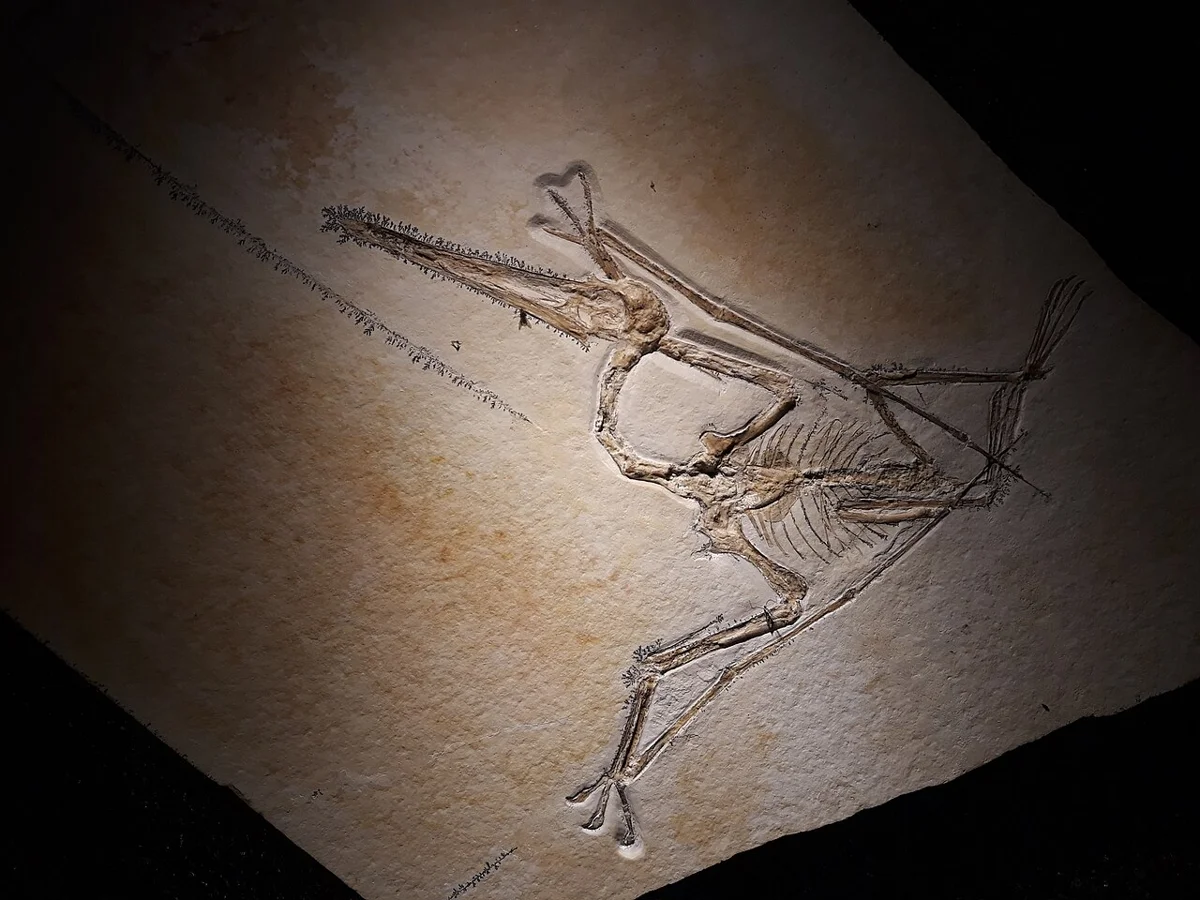
According to London's Natural History Museum, pterosaurs were around until the end of the Cretaceous Period, 66 million years ago, and their extinction coincides with an asteroid striking Earth, the event that also wiped out the dinosaurs. The museum notes that pterosaurs were not dinosaurs but a separate group of flying reptiles. "Pterodactyl" is the everyday name, and as Snopes puts it, while fossils tell us a lot about what the genus looked like, there's no evidence it somehow survived into the 21st century.
Why This Fake Went Viral
- Night footage hides detail. In a dark, low-resolution clip, artefacts such as the changing building text are easy to miss without pausing.
- Earlier claims were circulating. Maussan's "pterodactyl" clips were shared from 5 November. Snopes says it is unclear whether they inspired the fake.
- Shared without checks. The Instagram caption quoted by Snopes noted that skeptics thought it could be "digitally altered footage", but the account shared it anyway.
- A familiar pattern. Factash has covered similar AI fakes, including the AI airport ground stop video and the Gaza flooded tents image.
How to Check Claims Like This Yourself

- Read the background. Pause and zoom on signs, shop names and number plates. Snopes caught this one because building letters morphed. AI tools often render text poorly.
- Watch the edges. Wings, hands, wires and outlines that melt, flicker or merge into the background are common AI artefacts.
- Find the first upload. Screenshot a frame and run it through Google Lens or another reverse image search. If the earliest post is a meme page with no named filmer, be suspicious.
- Look for real reporting. A living prehistoric animal would be global news with scientists, officials and museums all over it. Here, the local authority said the opposite.
- Search a fact-checker. Type the claim plus "fact check" and look for Snopes, AFP Fact Check, Reuters Fact Check, Lead Stories or Full Fact.
- Read the caption closely. A caption that itself mentions the footage could be "digitally altered" is a reason to check before sharing.
Want the full toolkit? Read our guide on how to check fake news. More fact checks: the Kraków shooter AI photo, the Trump 90-day blackout video and the "Trump was arrested" text hoax. Browse everything in Technology.
FAQ
Is the pterodactyl video from Ciudad Juárez real? No. Snopes rated the viral clip fake on 17 November 2026, saying it was generated or edited with AI. Letters on a building in the video shift and change, at times not looking like letters at all, which Snopes says is a telltale sign of AI.
Are pterodactyls still alive anywhere? No. Pterosaurs, the group that includes Pterodactylus, lived until the end of the Cretaceous Period about 66 million years ago, according to London's Natural History Museum. There is no evidence any survived to today.
What did officials in Ciudad Juárez say? Sergio Rodríguez, head of Ciudad Juárez's municipal Civil Protection, told local media on 11 November 2026, before the AI clip circulated, that the pterodactyl videos being shared were digital entertainment with no real basis, and that if such an animal existed, Mexico's INAH and international institutions would already be investigating.
Where did the pterodactyl rumour start? Snopes says it could not identify the source of the AI clip. Earlier in November, Mexican UFO journalist Jaime Maussan shared three clips he claimed showed a pterodactyl near Ciudad Juárez, starting on 5 November. Snopes said it is unclear whether those inspired the fake.
How can I tell if a viral animal video is AI? Pause and zoom on signs, number plates and shop names, since AI often garbles text. Watch edges and outlines for melting or flickering, reverse-search a frame to find the first upload, and check whether officials, scientists or fact-checkers have said anything.
Sources
- Snopes, "Does video show pterodactyl flying in Mexico?" by Laerke Christensen (17 Nov 2026) (main source)
- Netnoticias, "Desmiente Protección Civil avistamiento de 'pterodáctilo' en Juárez" by Guillermo Leyva (11 Nov 2026, Spanish)
- Radionet, "Autoridades descartan avistamiento de pterodáctilo en Juárez" (11 Nov 2026, Spanish)
- Infobae, "Captan supuesto Pterodáctilo volando en Ciudad Juárez: Jaime Maussan reacciona al video viral" (12 Nov 2026, Spanish)
- Natural History Museum, London, "Pterosaurs: the truth about these flying dinosaurs"
- Britannica, "Pterodactyl"
Last checked 17 November 2026, 7:00 PM IST.
Image credits
- Featured image: original Factash graphic.
- Pterodactylus antiquus fossil photo: "Fossil of Pterodactylus antiquus from Solnhofen" by Dean Falk Schnabel, Wikimedia Commons, licensed CC BY-SA 4.0. Changes: resized from 4128×3096 to 1200×900 and converted to WebP; this adapted version is shared under the same licence.
- "5 ways to spot an AI creature video" infographic: original Factash graphic, based on Snopes and the Natural History Museum.
- The viral clip itself is not reproduced here; archived copies are linked in Snopes' fact check.