Last updated: 16 Nov 2026, 7:00 PM IST
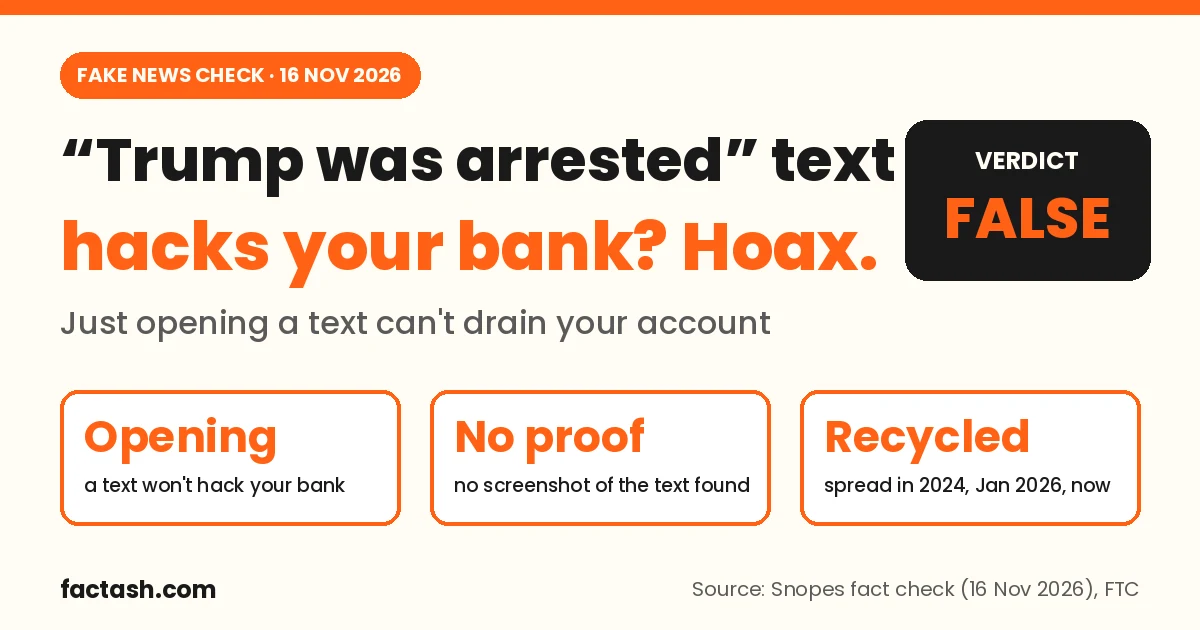
A warning shared widely on Facebook says that if you get a text saying "Trump was arrested", you should not open it because it will "attack your bank account". Snopes rated the warning False and says it has circulated before.
Main source: Snopes fact check by Jordan Liles, 16 November 2026. We checked the viral "Trump was arrested" text warning against Snopes' reporting and the US Federal Trade Commission's own data on how text scams actually work.
VERDICT: FALSE. There's no evidence that opening a "Trump was arrested" text attacks your bank account. Snopes rated the warning False and called it a longstanding hoax. It found no screenshot or transcript of the supposed text, and it says you can't get scammed just by opening and reading a message. Real text scams need you to reply or click a link first.
The Claim
"FYI... Just sharing, idk how true this is but just in case....if you get a text that Trump was arrested don't open it ,because it will attack your bank account. Tell all your family, & friends. Too much going on! Please forward to family, followers and friends ASAP! Do not open any text msg about Trump."
That's the copy-paste text Facebook users shared, as quoted by Snopes, which archived several of the posts (example: archived Facebook post). According to Snopes, the warning spread mostly on Facebook in the days around the 2026 US midterm elections, and Snopes readers emailed asking whether the dangerous text was real.
The post itself says the person sharing it did not know whether it was true ("idk how true this is").
What Snopes Found
1. No copy of the alleged text has been found. Snopes says it did not locate any screenshots or transcripts of the alleged message, either when the warning first started circulating in November 2024, when it came back in January 2026, or now. It also couldn't work out who started the rumour.
2. No credible reports from people who received it. Snopes searched places where scam victims compare notes, including Reddit's r/Scams community, and found no credible discussion of the supposed scam.
3. The warning has circulated before. Snopes says people began sharing the warning shortly after the US Justice Department indicted Trump in 2023 and around the time he won a second term. Back in 2016, Snopes also debunked a similar hoax that claimed a virus would infect your device if you clicked a photo of Trump's "arrest".
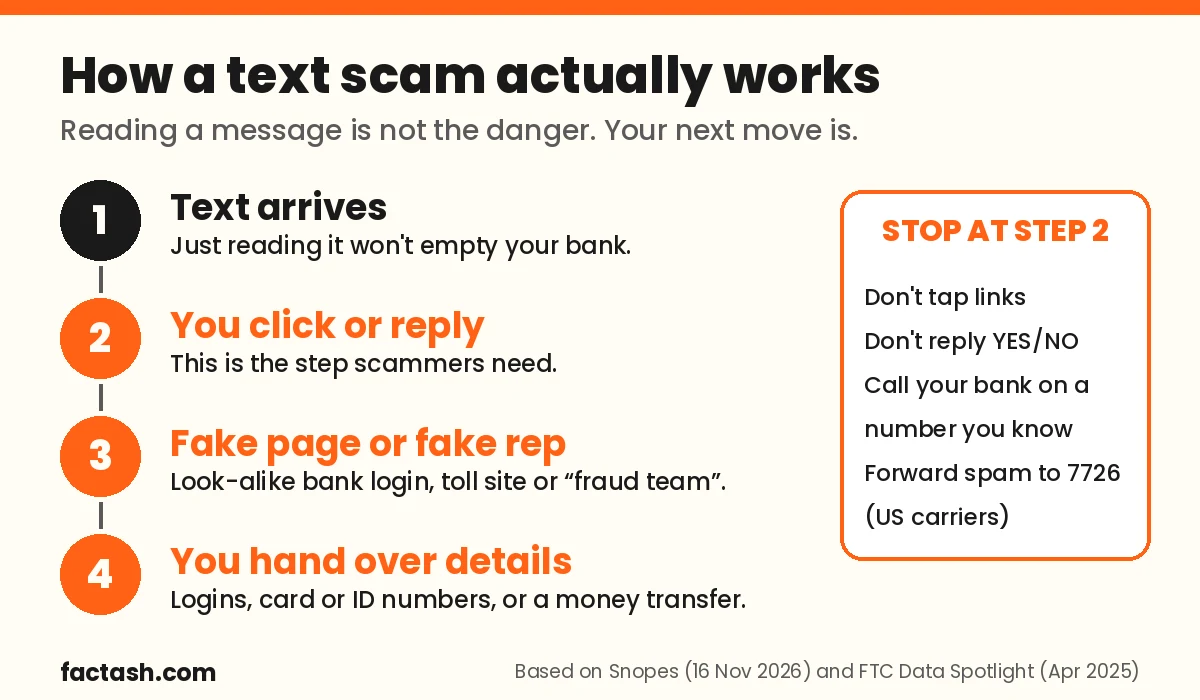
4. That's not how text scams work. Snopes says you can't get scammed simply by opening and reading a text. Scammers typically need you to respond or click a link, and then fill in login details, personal information or financial data, for example on a fake bank login page or a fake Amazon login page.
The Real Risk: Text Scams That Need a Click or Reply
Scam texts themselves are a real problem. In its April 2025 Data Spotlight, the FTC said people reported $470 million in losses to text scams in 2024, more than five times the 2020 number. The FTC also notes that most frauds are never reported, so the real figure is likely higher.
According to the FTC, the top five text scams it saw in 2024 were:
- Fake package delivery problems, usually pretending to be the US Postal Service, asking for a small "redelivery fee".
- Phony job offers, including "task scams" where you rate products or apps and are later told to send money.
- Fake fraud alerts that look like they're from a bank or Amazon and ask you to call a number or reply YES or NO.
- Bogus unpaid toll notices with a link to "pay your balance".
- "Wrong number" texts that turn into a fake friendship and then a bogus investment pitch.
Each of these, as the FTC describes them, relies on the recipient doing something: clicking, replying, calling or paying. For more on scams, see our breakdowns of fake FBI and FTC agent scam calls and Black Friday fake online stores.
Why Warnings Like This Spread
- A well-known name. Snopes notes the warning resurfaced around the 2026 US midterm elections and after earlier news about Trump's indictment and re-election.
- Urgent wording. The post's own phrases, "attack your bank account" and "forward ... ASAP", encourage sharing before checking.
- It is framed as a favour. The post asks readers to tell family and friends, so it spreads as a well-meant warning.
- Real scams exist. Because scam texts are common, as the FTC's figures show, a false warning can sound believable. We saw the same pattern with the iPhone Live Listen "remote control" panic.
How to Check Claims Like This Yourself
- Look for evidence. A genuine scam warning usually shows the actual message, the sender or the link. A warning with no screenshot or example deserves caution.
- Note the sharer's own doubts. Phrases like "idk how true this is" mean the person sharing it has not checked it.
- Search a fact-checker. Type the key phrase plus "fact check" and look for Snopes, Lead Stories, AFP Fact Check, Full Fact or Reuters Fact Check.
- Check official scam guidance. In the US, the FTC publishes what scam texts actually look like and how to report them at ReportFraud.ftc.gov.
- Remember the rule. Reading a text isn't the danger. Don't click links or reply to unexpected texts, and contact your bank only through a number or website you know is real.
- Don't forward panic. Before you hit "forward to all", spend 30 seconds checking.
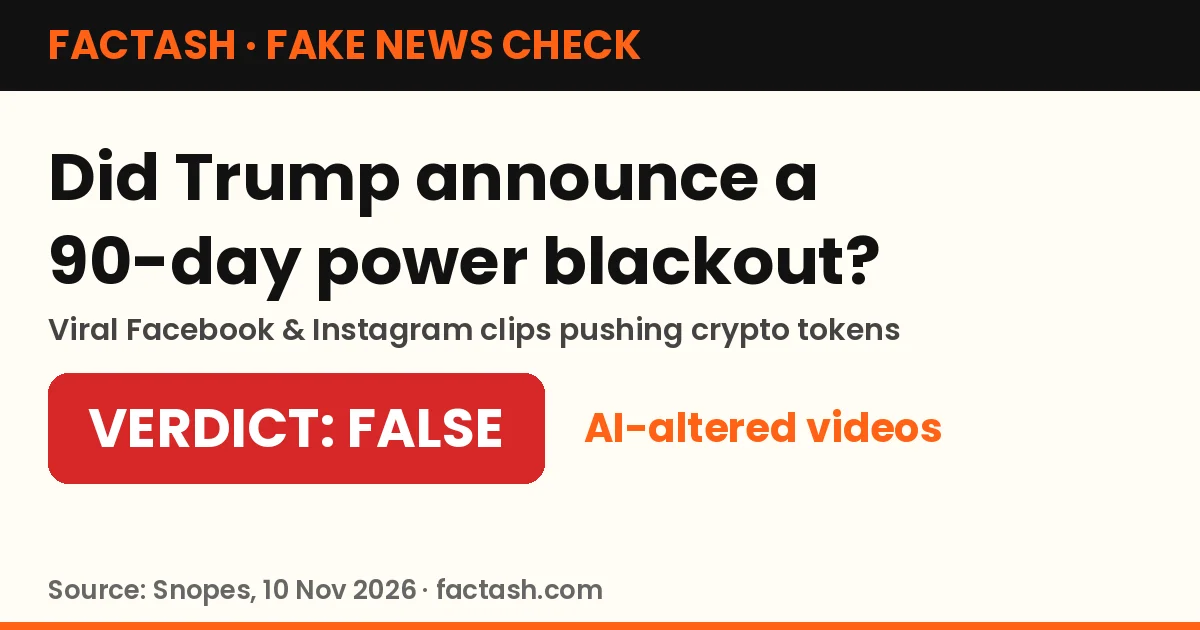
Read our guide on how to check fake news. More fact checks: the Trump 90-day blackout video and the AI airport ground stop video. Our explainer on passkeys shows how they help protect your logins from phishing. Browse everything in Technology.
FAQ
Will opening a 'Trump was arrested' text hack my bank account? No. Snopes rated the warning False on 16 November 2026. It says you can't get scammed simply by opening and reading a text message. Scams usually need you to reply or click a link, then type in logins, personal information or financial details.
Is there a real 'Trump was arrested' scam text going around? Snopes found no screenshots or transcripts of the alleged text when the warning spread in November 2024, in January 2026 or now, and could not find who started the rumour. Searches of Reddit's r/Scams community turned up no credible discussion of it.
Why is this warning spreading again? Snopes says it resurfaced in the days around the 2026 US midterm elections, mainly on Facebook, where users copy-pasted it and urged people to forward it to family and friends.
What should I do if I get a suspicious text? Don't click links or reply. If it might be real, contact the company using a phone number or website you know is genuine. In the US, the FTC says to forward spam texts to 7726 (SPAM), report them in Apple Messages or Google Messages, and report scams at ReportFraud.ftc.gov.
I already clicked a link and entered my details. What now? Snopes recommends contacting your bank or card company through an official number (not one from the text), reporting the text to the FTC, and filing a complaint with the FBI's Internet Crime Complaint Center at IC3.gov if you lost money.
Sources
- Snopes, "Warning about 'Trump was arrested' text is longstanding hoax" by Jordan Liles (16 Nov 2026) (main source)
- Snopes, "False Warning Claims 'Trump Arrested' Text Messages Attack Bank Accounts if Opened" (15 Nov 2024)
- Snopes, "Look out for false warnings about 'Trump was arrested' scam text" (19 Jan 2026)
- Snopes, "'Donald Trump Arrested' Virus Warning" (1 Nov 2016)
- US Federal Trade Commission, "Consumer Protection Data Spotlight: Top text scams of 2024" (April 2025, PDF)
- FTC, ReportFraud.ftc.gov and FBI Internet Crime Complaint Center (IC3)
Last checked 16 November 2026, 7:00 PM IST.
Image credits
- Featured image: original Factash graphic.
- "How a text scam actually works" diagram: original Factash graphic, based on information from Snopes and the FTC.
- Copies of the original Facebook warning posts are archived and linked in Snopes' fact check.